C-MAP/Commercial

C-MAP/Commercial, often referred to simply as C-MAP, is a company known for its marine navigation solutions and cartography. Founded in the late 1980s, C-MAP has been a prominent provider of digital charts and related services for mariners, both commercial and recreational. Here are some key points about C-MAP and its operations:


Products and Services:


  1. Electronic Navigation Charts (ENCs):


    • C-MAP produces detailed electronic charts that are widely used in a variety of navigation systems. These charts include crucial information such as depths, hazards, and other navigational aids.


  2. Professional Maritime Solutions:


    • The company offers specialized solutions for commercial shipping, fishing, and other professional maritime sectors. This includes advanced routing, weather overlays, and real-time updates.


  3. Cartography and Data Services:


    • C-MAP provides high-quality cartographic data that supports safe and efficient navigation. Their data is often integrated into marine electronics produced by various manufacturers.


  4. Recreational Boating:


    • Beyond professional applications, C-MAP also supports recreational boating with user-friendly charting products that integrate into consumer-grade marine electronics.


Technology and Innovations:


  1. Compatibility:


    • C-MAP charts and services are compatible with a wide range of hardware from leading marine electronics manufacturers, making them versatile and user-friendly.


  2. Real-Time Updates:


    • They offer real-time data updates which include weather information, tides, currents, and other important navigational details.


  3. Online Services:


    • The company provides online tools and mobile apps, allowing users to plan trips, check conditions, and download updates conveniently.


Ownership and Structure:


  • Acquisitions and Mergers:

    • Over the years, C-MAP has undergone various acquisitions. Notably, in 2007, Jeppesen, a subsidiary of The Boeing Company, acquired C-MAP. Later, in 2017, Navico, a marine electronics company, acquired C-MAP from Boeing. Navico itself is a prominent name in marine electronics, owning brands like Lowrance, Simrad, and B&G.


Industry Impact:


  • Safety and Efficiency:


    • C-MAP's products are essential for ensuring the safety and efficiency of maritime operations. Their charts help in avoiding hazards, plotting optimal routes, and complying with international regulations.


  • Innovation Leader:


    • The company is a leader in using cutting-edge technology to enhance marine navigation, consistently innovating to provide better, more accurate, and more comprehensive solutions.


Conclusion:


C-MAP/Commercial stands out as a pivotal player in the marine navigation industry, providing indispensable tools for both commercial and recreational mariners. Their commitment to quality, innovation, and comprehensive service maintains their reputation as a trusted source for marine cartography and data services.


Products

CM-93 and CM-ENC electronic chart databases, OceanView

Mashpee USA

133 Falmouth Road
Mashpee MA 02649
USA

Maritime News

Born into Maritime: John McDonald, Chairman & CEO, ABS

Born into Maritime: John McDonald, Chairman & CEO, ABS

13 hours ago
Many claim to have ‘saltwater in their veins,’ but all you have to do is walk into the corner office of John McDonald, the new Chairman and CEO of the American Bureau of Shipping (ABS), to see that him saying “I was born into maritime” is not hyperbole. The first thing that greets you is a Dusan Kadlec nighttime painting of the Brooklyn Bridge, a painting that has special meaning to him as he fondly remembers being on a boat in New York harbor in 1983, his father USCG Captain of the Port of New York at that time, watching the fireworks over the bridge for the celebration.
Shippers Cautious on Hormuz Passage, Seek Clarifications

Shippers Cautious on Hormuz Passage, Seek Clarifications

17 hours ago
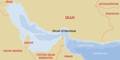
Shippers on Wednesday said they needed more clarity on the terms of the U.S.-Iran ceasefire before resuming transit through the Strait of Hormuz, as Iran said the waterway remained closed to vessels sailing without a permit.The six‑week conflict had brought traffic through the strait - a chokepoint for about 20% of global oil and liquefied natural gas (LNG) shipments - close to a standstill, pushing global energy prices sharply higher.Iran said it would offer safe passage in coordination with its armed forces, though its coastguards warned on Wednesday that any ship attempting to sail without permission would be "targeted and destroyed".
UN Resolution on Protecting Hormuz Shipping Vetoed

UN Resolution on Protecting Hormuz Shipping Vetoed

2 days ago
China and Russia on Tuesday vetoed a U.N. resolution encouraging states to coordinate efforts to protect commercial shipping in the Strait of Hormuz, calling the measure biased against Iran, while Washington's ambassador to the world body called on "responsible nations" to join the U.S. in securing the waterway.The 15-member Security Council voted 11 in favor of the resolution presented by Bahrain, with two against - China and Russia - and two abstentions.U.S. President Donald Trump threatened that "a whole civilization will die tonight" as Iran showed no sign of accepting his ultimatum to open the Strait of Hormuz by Tuesday evening, Washington time.Oil prices have surged since the U.S.
Jones Act Waiver Not Boosting Oil Flows Within U.S.

Jones Act Waiver Not Boosting Oil Flows Within U.S.

3 days ago
U.S. President Donald Trump's move allowing foreign-flagged cargo ships to move fuel and other goods between domestic ports has so far had little impact on American oil supply, according to trade data and analysts who noted that U.S. refiners and shippers are earning more profits sending fuel overseas.Last month, Trump waived Jones Act limitations for 60 days starting March 17, hoping the move would help tame the surge in fuel prices caused by the Iran war by increasing shipments from the U.S. Gulf Coast to other coastal markets in the country.So far, however, shipping data shows the move has not boosted U.S. oil flows between domestic ports. Instead, U.S.
Loaded LNG Tankers from Qatar Turn Back Before Hormuz Crossing

Loaded LNG Tankers from Qatar Turn Back Before Hormuz Crossing

3 days ago
Two vessels loaded with liquefied natural gas (LNG) from Ras Laffan, Qatar, turned back after they moved eastward towards the Strait of Hormuz, ship-tracking data showed on Monday.Had the vessels successfully crossed the strait, it would have been the first transit of LNG cargoes through the waterway since the U.S.-Israel war with Iran began on February 28.Data from analytics firms Kpler and LSEG showed the vessels, Al Daayen and Rasheeda, loaded their cargoes in late February. The data also indicated that the Al Daayen tanker was signalling for China at the moment.Additionally, Kpler data showed both tankers as controlled by QatarEnergy.